




Specifications
Description
Locality: Santa Cruz, Patagonia, Argentina
Era: Middle Jurassic
Geological Age: about 160 million years ago (Middle to early Late Jurassic)
Species: Araucaria mirabilis
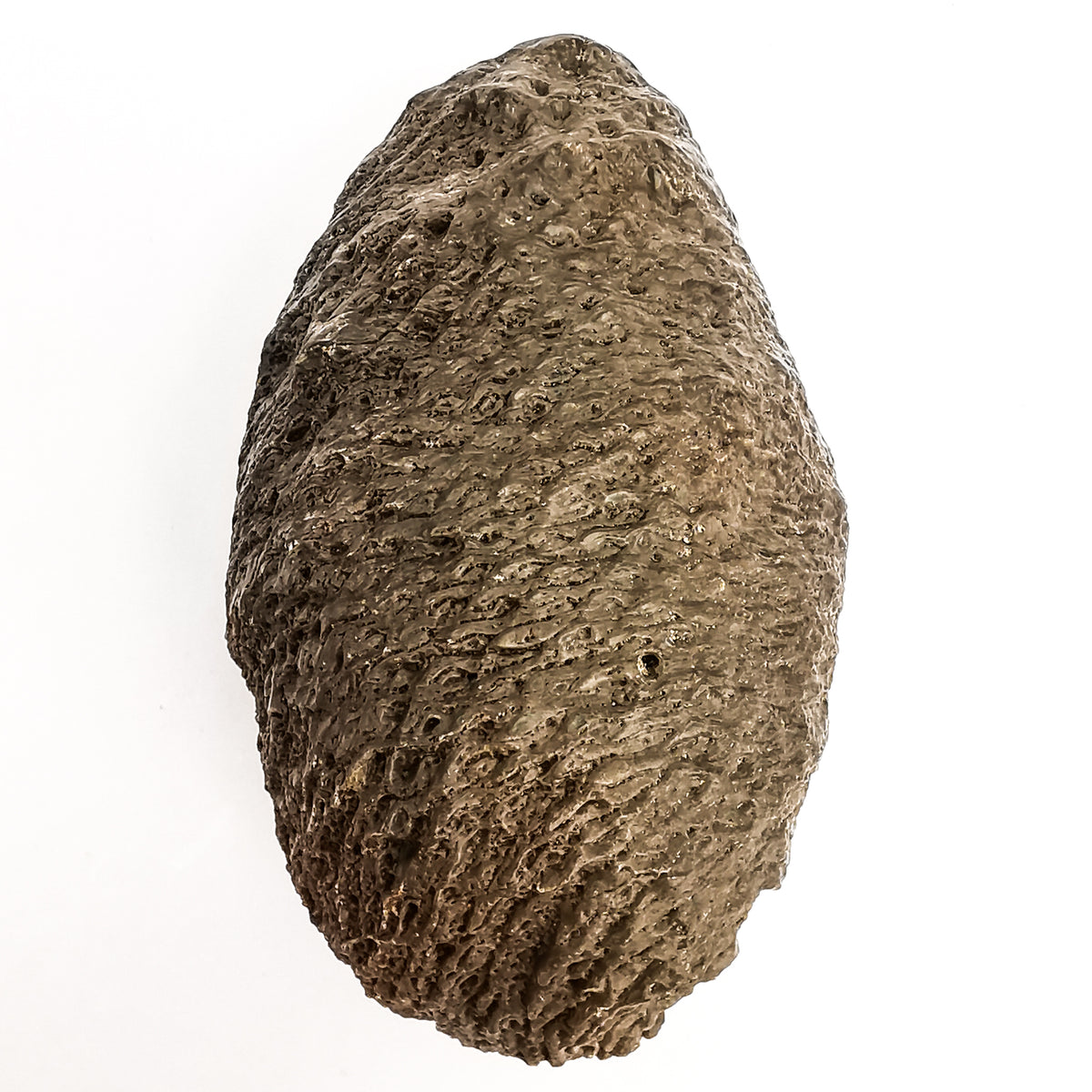
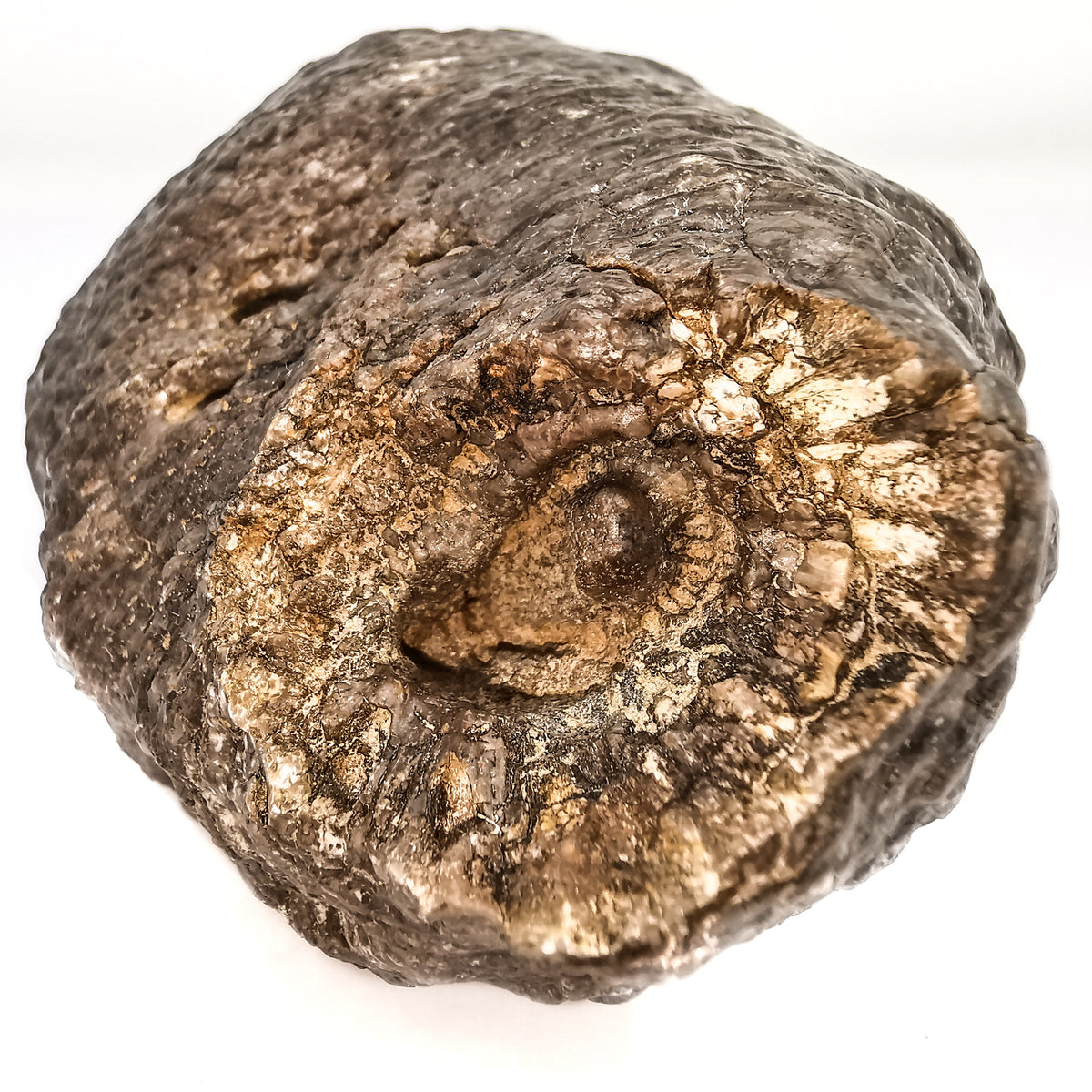
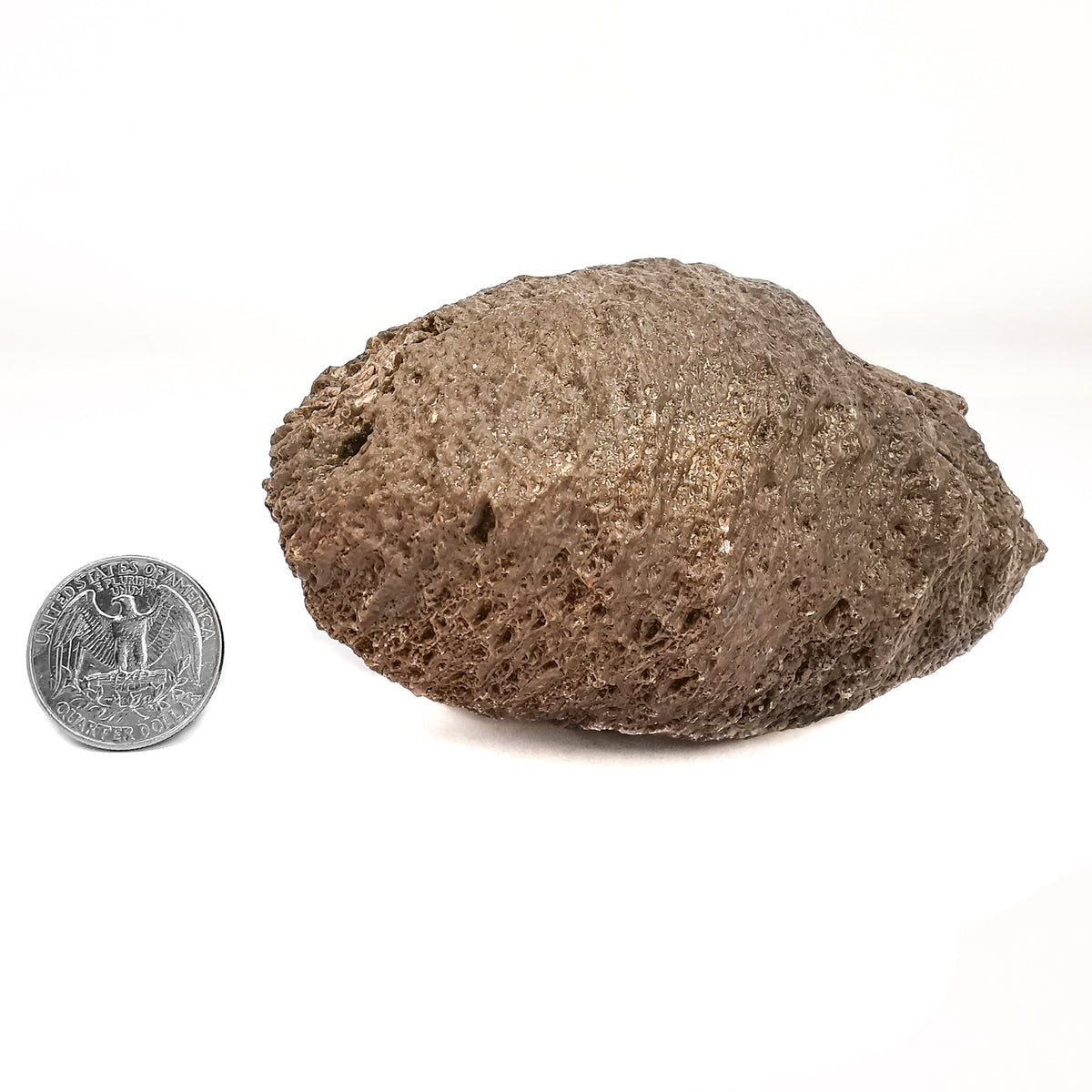
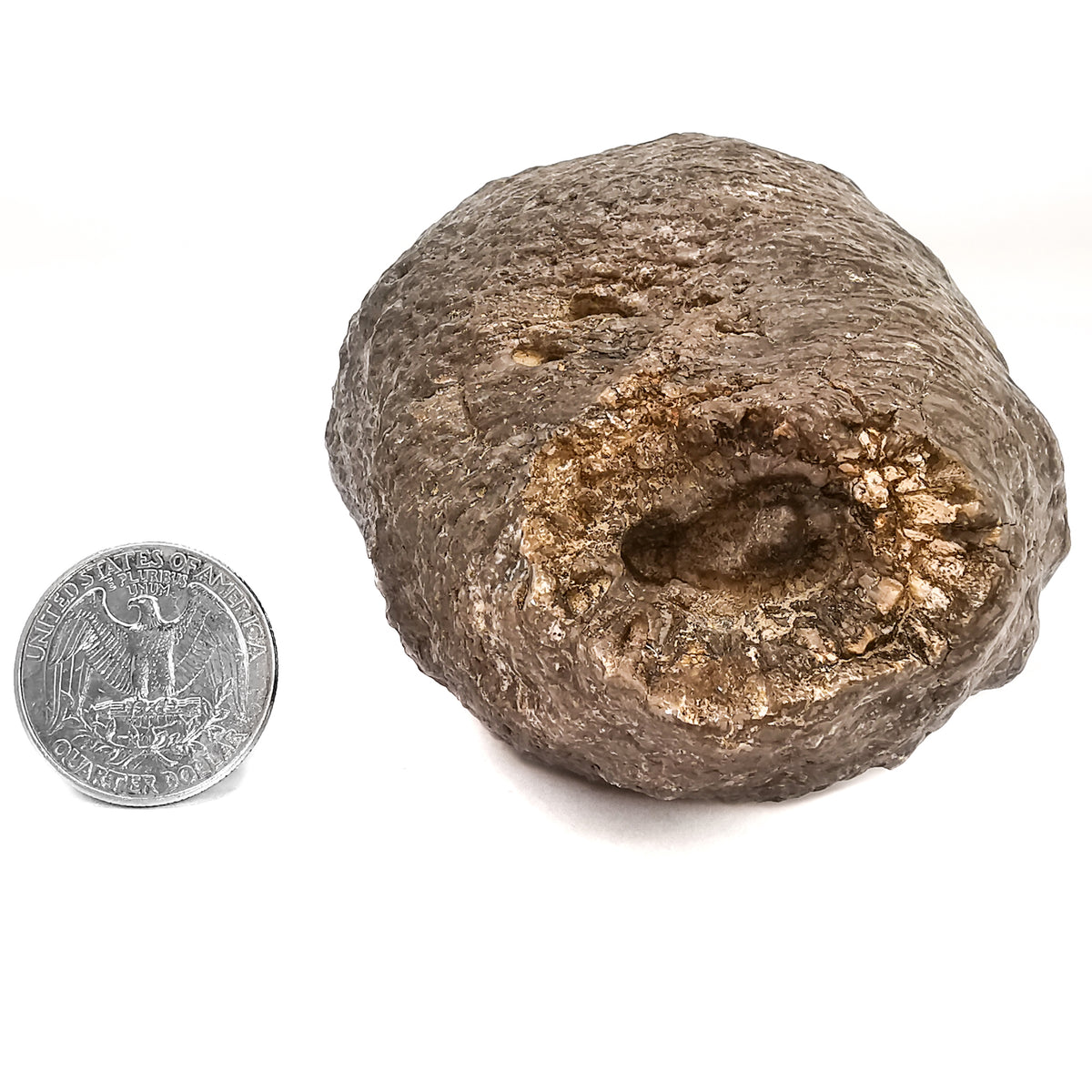
Description: This cone grew on a tree in a Jurassic forest in Patagonia that was buried by volcanic ash. The ash and later silica-rich water turned the forest to stone in remarkable detail. Some petrified trunks at the site are said to be 100 metres long, and inside some cones scientists have found seeds and even tiny embryos, about 2 mm long, preserved down to their growing tips.
The cones come from the Cerro Cuadrado petrified forest in Santa Cruz province. Anselmo Windhausen first collected wood and cones there in 1919 and 1922. Carlos Spegazzini named the cone in 1924, and a Field Museum of Chicago expedition gathered a second large collection soon after. G. R. Wieland published a full study, "The Cerro Cuadrado Petrified Forest", in 1935. In 1953, Mary Gordon Calder of the British Museum showed that several cone "species" were one, Araucaria mirabilis.
Araucaria mirabilis belongs to the same genus as today's monkey puzzle tree and Norfolk Island pine. Its closest living match is the Australian bunya pine, Araucaria bidwillii, rather than any South American species living today. Odd radish-shaped fossils found with the cones were a mystery until Calder identified them as the seedlings of this tree.
Specimens from the forest were sold as curios in Argentina and spread to museums and private collections worldwide. Since 2003, Argentina's heritage law, Ley 25.743, has prohibited the permanent export of fossils.
Size : 10.5cm x 7cm x 7cm
Weight: 499g
Quantity: 1pc
With this product, you will get the actual stone in the photograph. We do what we can to buy good quality products and price them honestly. The rocks may differ from the photos, but we hope we do them justice.